“Holy Boy” by Lee Heejoo: Kill Your K-Pop Darlings (BOOK REVIEW)
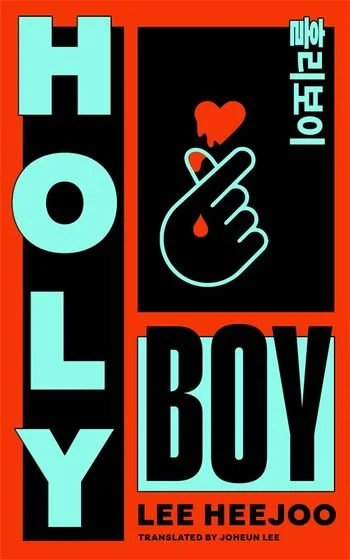
Kill Your K-Pop Darlings
Hey, Alex! What have you been reading lately?
Ever felt like, on paper, a book has all the components to become your next favourite read? That’s how I thought of “Holy Boy” by Lee Heejoo, which I got to dive into ahead of publication through NetGalley. There is drama, there is tension, there is murder. I can’t think of asking for much more.
I’ll be honest – I really wanted to love this one. It talks about K-pop culture, obsessive fandoms, and celebrity worship that is taken to terrifying extremes. Lately, I’ve been back in my K-drama era, I’ve studied Korean in high school, consumed an arguably unhealthy amount of Korean media over the years… this should have been my book.
Unfortunately, it wasn’t. Allow me to tell you why.
Tell me more. What is the book about?
Yosep is a K-pop idol like no other. Handsome, talented, and untouchable, his fans don’t simply adore him – they worship him. To them, he isn’t a human being but something divine.
That devotion curdles into horror when four religiously fanatic fans (sasaengs) abduct him and lock him away in a secluded house. Their goal isn’t to hurt him. They want to protect him by keeping him all to themselves. But love this holy is difficult to share between five people.
“Holy Boy” pushes the boundaries of idolisation, obsession, and dehumanisation. It is disturbing, messy, and provocative and asks us how far we can go to reach our goals and what happens after the people we have put on pedestals turn out to be not so perfect.
What are some strong and weak points of the book?
Let’s start with the good: the idea of “Holy Boy” is strong. A horror-inflected look at K-pop, parasocial relationships, and the violence of idol worship is fertile ground for a chilling story. There are moments, especially when we slip into Yosep’s point of view, where we glimpse the cracks beneath his image and realise he’s far from the saint fans believe him to be. Those moments worked for me. I wanted more of them.
The biggest issue, for me, was the execution of “Holy Boy”, and I suspect translation plays a certain role here. The dialogue often felt unnatural, exaggerated to the point of disbelief. I’ve watched well over 300 K-dramas, so I understand why heightened reactions and melodrama are used as cultural storytelling tools. But this isn’t a drama. It’s a novel, and no one, not even unhinged superfans, speaks like this on the page. Many scenes didn’t make sense linguistically or emotionally, which repeatedly pulled me out of the story.
Structurally, the book didn’t help itself either. There are no chapters, only a few massive sections divided by days. POVs shift all the time, timelines jump back and forth, and soon I found myself less curious and more exhausted by the mishmash of events that were unfolding before me.
What disappointed me most was the opening. When you read the back of the book, you expect insight into the Korean entertainment system – neon lights, backstage politics, fan culture, the machinery of fame. Instead, we’re dropped into a mansion out of a Gothic tale with hints of ghostly presences, where the three women keep Yosep hostage. It felt disconnected from the world the book claims to critique, almost like two opposite genres stitched together without ever trying to blend.
Any final thoughts? Should I read it too?
Although I didn’t enjoy “Holy Boy”, I don’t think it’s an outright bad book. It’s a book that didn’t live up to its potential for me, but I do realise that my expectations were high. If you’re interested in celebrity culture and the darker edges of fandom, “Holy Boy” might resonate with you well.
Personally, I felt let down. The premise promised a sharp, unsettling critique of idolatry, but the narrative never dug deep enough into the system behind it. Instead, it relied too heavily on shock, chaos, and disorientation without grounding them in anything concrete.
That being said, I’m curious whether the original Korean text reads differently – smoother, sharper, and intentional – and whether I got lost in translation. I’d love to hear from someone who loved this book and can convince me I should give it another go.
Thank you so much!! Are there any similar books that you can recommend?
For all those interested in Korean culture or hostage narratives, you can check out the following:
🎤 “K-Pop Confidential” by Stephan Lee — a YA fast-paced insider look at the K-pop industry, balancing fandom, fame, and the cost of perfection.
🔪 “The Good Girl” by Mary Kubica — a psychological thriller about captivity and obsession, where control and perception slowly unravel.
📲 limaistyping…
rating: ☀️
tropes: 🫰 freaky fans | 🗝️ hostage situation | 🛐 idolatry | ☠️ till death do us part | 💔 self-sabotage
read if you like: K-Pop, haunted mansions, keeping a secret, ghost stories, Asian cooking
look out for: 🎤 Yosep | 🚗 the car (where did it go?) | 🚬 two-faced superstars | 👻 a missing body | 👶 narrator reveal
Reading this is like making a pros & cons list about your crush, knowing deep down they are the most toxic person on Earth.
tropes: 🫰 freaky fans | 🗝️ hostage situation | 🛐 idolatry | ☠️ till death do us part | 💔 self-sabotage
read if you like: K-Pop, haunted mansions, keeping a secret, ghost stories, Asian cooking
look out for: 🎤 Yosep | 🚗 the car (where did it go?) | 🚬 two-faced superstars | 👻 a missing body | 👶 narrator reveal
Reading this is like making a pros & cons list about your crush, knowing deep down they are the most toxic person on Earth.
