“Jackson Alone” by Jose Ando: To Lose And To Find Oneself Through Reflection (BOOK REVIEW)
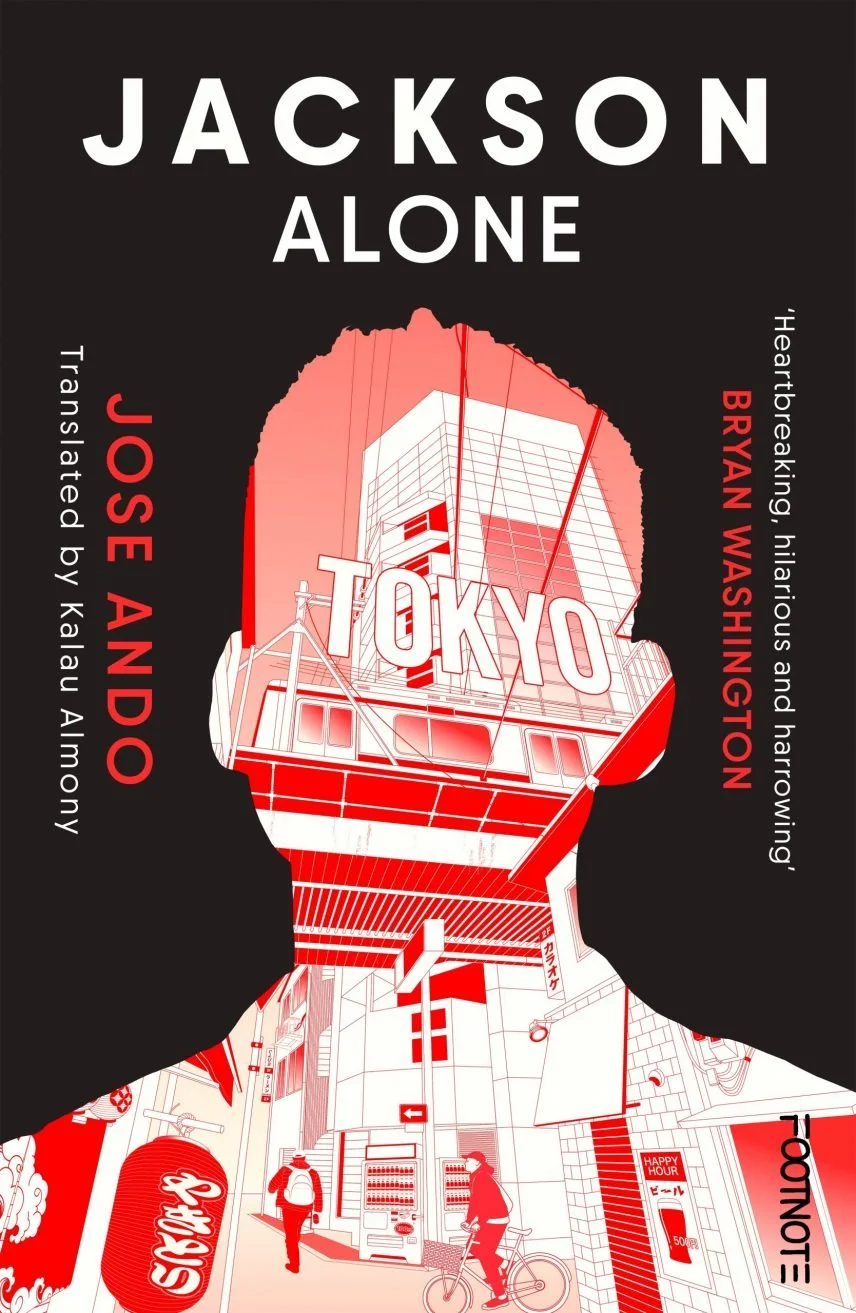
To Lose And To Find Oneself Through Reflection
Hey, Alex! What have you been reading lately?
I’m proud to share that I read Jackson Alone by Jose Ando in a single sitting. One train ride, and I devoured this sharp and unsettling novella that was sent to me in advance on NetGalley, despite the fact that I like to take my time with books (a.k.a. spend ages getting through them).
Ando’s story is sure to appeal to every reader – mystery, comedy, drama, and tons of social commentary, are all blended together. The premise it is based on is disturbing and absurd at the same time and draws a painful portrait of how representing Black people for their colour and not identity in today’s age and society can be more harmful than liberating.
Tell me more. What is the book about?
Jackson, a mixed-race queer man who earns a living as an athletes massage therapist in Japan, shows up to work wearing a T-shirt with a QR code printed on it. That code leads to a pornographic video featuring a Black man who looks just like him.
Jackson has no recollection of filming such a video. He doesn’t know who sent the shirt or why. As rumours circulate, he meets three other similar-looking men who have received the same T-shirt or have been dragged into the situation for different reasons.
What develops is an act of shared defiance, and a slow shift from passive confusion to something darker. As the lines between identity and impersonation blur, so do the moral boundaries of the four guys who find a lot in common. They step into each other’s lives, taking revenge on toxic boyfriends, abusive bosses, and people who have wronged them, while searching for the T-shirt’s sender.
Jackson Alone is thrilling, uncomfortable, and deeply unhinged in the best way possible.
What are some strong and weak points of the book?
Despite being only around 100 pages long, this story is packed with big ideas. It dives into identity, race, and queerness, all within the boundaries of contemporary Japan. Ando doesn’t shy away from uncomfortable truths and fills his pages with explorations of racism, fetishisation, and invisibility.
The plot moves quickly and hooked me from the beginning. I also really liked that unconventional, fragile kind of friendship formed between Jackson and the other men. There’s something tender in the way they find reflection and validation in one another.
Without a doubt, my favourite moment was the commentary on colour in manga: white pages and black outlines, where the black colour is only used to separate characters from the page, not to represent human identity. The man who points that out is absolutely devastated and finds most of Japanese media depressing as a result. His inability to connect to that world, as well as his sense of alienation from something globally adored, are subtle but heartbreaking. This ties well into Japan’s obsession with fair skin and how deeply white supremacy is embedded into the beauty standards of the nation. Can the four men exist in a place that doesn’t see them for who they are and treats them as liminal spaces?
One shortcoming for me is that Jackson doesn’t feel as central to the narrative as the title suggests he should. Once his three “lookalikes” are introduced, he tends to fade into the background rather than stand out. He is dismissive, introverted, and strikingly nonchalant about what’s happening to him. In a group setting, he rarely takes the lead and the story loses focus because of this.
The ending also felt rushed to me. The idea of the men swapping lives and plotting revenge is intriguing, but too many concepts are introduced too quickly without being given room to breathe. The story takes a violent twist, yet the characters treat life-altering consequences as if they’re deciding on a coin flip. That emotional detachment is interesting, but it left the conclusion feeling slightly under-explored, and I wonder if developing the story further would have worked better.
Any final thoughts? Should I read it too?
Although it wavers at times, Jackson Alone is a bold, thought-provoking read. It challenged me as a reader to question the way identity is viewed, flattened, sexualised, and erased all within the same story. It asked me to sit with what is discomforting, to confront stereotypes, and to recognise the violence in both visibility and invisibility.
At its core, it is a story about accepting yourself through finding people who reflect parts of you back, even when that reflection is fractured, messy, and dangerous. And I found something beautiful in that.
If you enjoy short, punchy, socially conscious fiction that doesn’t give simple solutions to world-wide problems, this one will sit with you long after the last page.
Thank you so much!! Are there any similar books that you can recommend?
If Jackson Alone got you thinking about queerness of one’s place in the world, you should definitely check these two out:
🥊 Different for Boys by Patrick Ness — a graphic novel exploring masculinity through the lens of a queer boy growing up in a world that punishes softness.
❤️🩹 Crush by Richard Aiken — a poetry collection dealing with attraction, obsession, and how easily we lose control in the face of desire.
📲 limaistyping…
rating: ☀️☀️☀️
tropes: 🫱🏾🫲🏽 biracial characters | 🏳️🌈 queer bodies | 🔞 revenge porn | 🔄 identity swap | 🫥 repressed identities
read if you like: massages, urban fashion, QR codes, novellas, anime
look out for: 🚕 confused taxi drivers | 📢 brand PR | 👕 T-shirt in the mail | 🏨 hotel room address | 🪓 bloodlust
"This will remind you to be cautious of what clothes you wear to go to the office."
tropes: 🫱🏾🫲🏽 biracial characters | 🏳️🌈 queer bodies | 🔞 revenge porn | 🔄 identity swap | 🫥 repressed identities
read if you like: massages, urban fashion, QR codes, novellas, anime
look out for: 🚕 confused taxi drivers | 📢 brand PR | 👕 T-shirt in the mail | 🏨 hotel room address | 🪓 bloodlust
"This will remind you to be cautious of what clothes you wear to go to the office."
