A Historical Escapist Adventure
Hey, Alex! What have you been reading lately?
I have always been fascinated by disaster stories. Maybe that's why dystopian and speculative fiction have become some of my favourite genres. There is something strange about watching the world stand on the edge of collapse, about seeing hope and love emerge only when everything else has already fallen apart. I think we're most aware of being alive the moment this might get taken away from us.
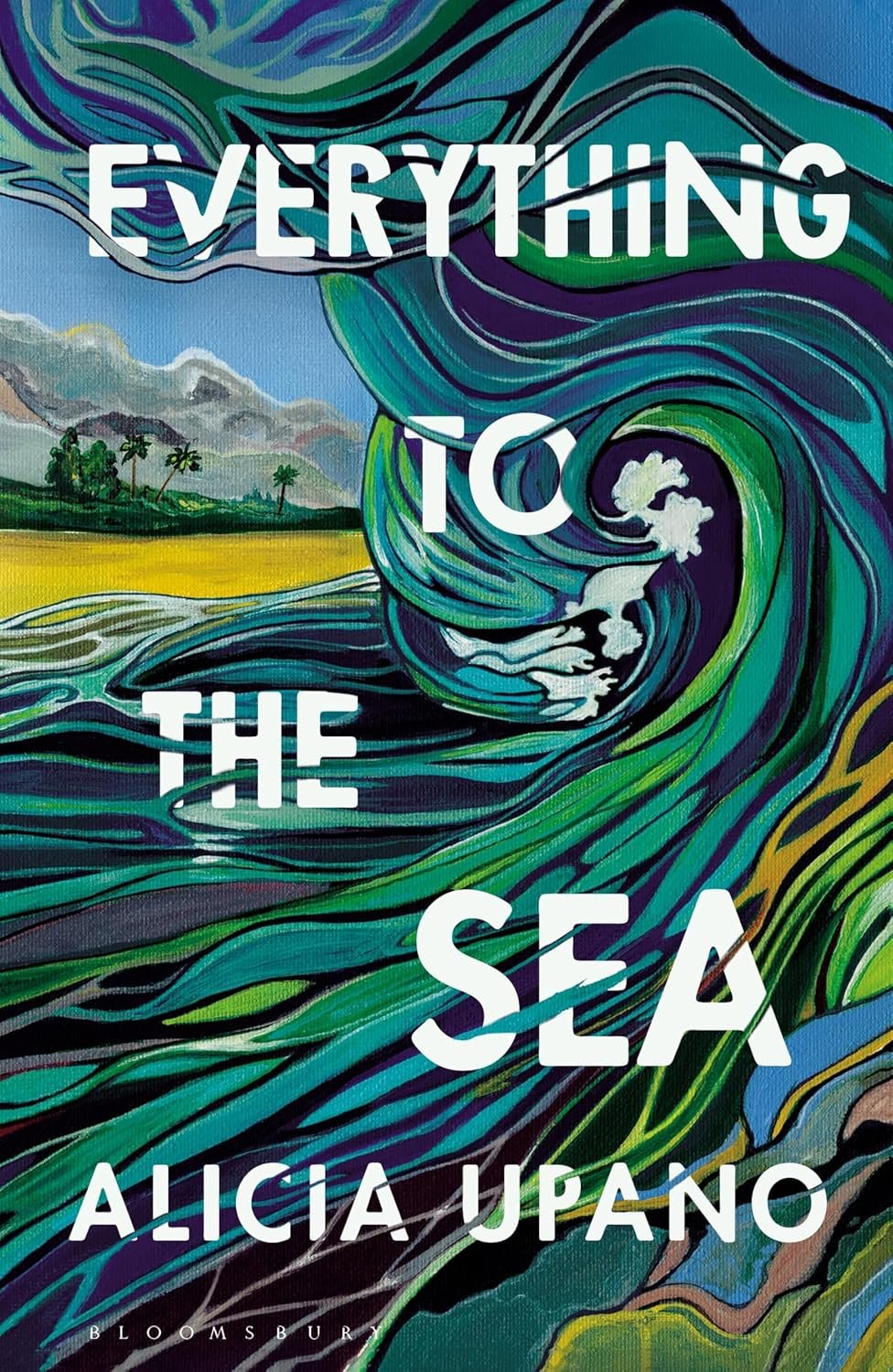
So when Everything to the Sea by Alicia Upano made its way to my inbox, I knew it belonged on my shelf. A literary novel built around a devastating tsunami in Hawai'i? I was sold. It also happened to be my first novel by a Hawaiian author, which made the experience feel even more special.
What I didn't expect was that this wouldn't be a novel about a tsunami. It is about what happens after. About the impossible task of rebuilding yourself when there is nothing to go back to.
Special thanks to NetGalley and Bloomsbury Publishing for sending me an advanced reader’s copy!
Tell me more. What is the book about?
Jane and Kenji spend the summer together in Hilo, their first and last one. Jane dreams of leaving Hawai'i to attend university on the mainland, while Kenji wants to stay on the island. That is until he decides, at the last moment, to follow her.
Not long after a catastrophic tsunami destroys their hometown. Their families, their childhood homes, the streets that shaped them – gone within seconds.
The disaster tears the young couple apart. Jane stays on the mainland, burying her grief beneath parties, reinvention and the desperate hope that if she keeps moving, the pain won't catch up with her. Kenji returns to Hawai'i, volunteering in shelters, searching through the wreckage for pieces of the family he lost and carrying the unbearable guilt of not being there when they needed him most.
Ten years pass before their paths cross again. But grief does not fade easily, and some places inside us refuse to heal until we finally look them in the eye.
What are some strong and weak points of the book?
One of my favourite things about Everything to the Sea is how it toys with anticipation. Being the type of person who reads the back of a book first, I went in already knowing that a tsunami is coming, but had no clue when exactly it will hit. Those opening chapters are filled with warmth and nostalgia as Jane and Kenji slowly fall in love, yet every quiet conversation carries an invisible countdown. I became fixated on trying to predict the moment of great doom, convinced that Jane and Kenji will be there to experience it firsthand. Instead, Upano lets them leave Hilo first. The wave arrives only after they are gone, destroying the place that made them who they are while they are hundreds of miles away, helpless.
That author’s decision changed the novel for me. The tsunami occupies very little space on the page. Upano focuses on survivor's guilt, displacement and the strange loneliness of grieving a place you weren't there to say goodbye to. Jane and Kenji don't witness the destruction. They are forced to imagine it, to rewind time, to suffer on repeat.
What follows is less a romance than a meditation on reconstruction. The tsunami doesn't just take away their families; it steals their identities, their future together and every certainty they once held. Watching them spend years blaming themselves, drifting apart, searching for meaning and slowly learning that healing does not equal betrayal added depth to their journey, one they were certain to experience the bottom of.
Nothing in Everything to the Sea is rushed. Jane and Kenji’s relationship grows with patience, breaks with honesty and heals in small, believable steps. Upano understands that grief is not linear, and neither is love.
The author has a remarkably distinctive voice – long, flowing sentences that stretch and linger on emotions instead of racing towards resolution. Her frequent use of absolute clauses creates an almost unfinished rhythm, as though something is always missing from the page.
The novel also leans into political and environmental discussions a lot. While they belong in a story centred around Hawai'i and climate catastrophe, there were moments where these interrupted the momentum and took the focus away from Jane and Kenji. I found myself wanting to stay with the two young adults a little longer before stepping back into broader conversation, but there were never instances where that had a negative effect on the text.
Any final thoughts? Should I read it too?
Everything to the Sea is the type of book interested in the silence that follows tragedy. It is about learning how to carry unbearable grief without letting it define the rest of your life. About survivor's guilt, first love, community, forgiveness and the impossible question of whether it's ever acceptable to be happy again after losing your roots.
You will cry. You will blame its characters. You will question the decisions they make before realising you would probably have acted the same in their circumstances.
To me, great literature refuses to let you stay a spectator. It asks you to feel and immerses you in the world of its story. Upano has written a novel that stays with you long after you have finished it. Like a true tidal wave, it can drown and overwhelm you, it can draw back and leave you dry, begging for more, and then it can take you away all over again when you least expect it to.
Quiet, aching and hopeful, Everything to the Sea reminded me that surviving is the hardest and most beautiful part of any disaster. One that Jane and Kenji decide to not spend alone.
Thank you so much!! Are there any similar books that you can recommend?
Of course. Reading Everything to the Sea really reminded me of these two books:
🎮 Tomorrow, and Tomorrow, and Tomorrow by Gabrielle Zevin – an overview of two best friends’ video game-making career and how they navigate love, loss, and everything in between.
🎬 Main Characters by Bobby Palmer – a love story told through the eyes of friends, family, random passersby, anyone but the two people falling for each other.
📲 limaistyping…
rating: ☀️☀️☀️☀️☀️
tropes: 🌊 natural disaster | 🧠 legacy | 🧳 immigration | ❤️ first love | 🫂 forgiveness
read if you like: tsunamis, architecture, love triangles, environmentalism, modern art
look out for: 🐾 remnants | 📞 a phone call | 🖼️ art exhibition invite | 👦 missing adopted son | ☕️ orange cup
Reading this feels like you are drowning in your own messy, not-straightforward dreams about the future and your high school crush comes to rescue you from the water.
tropes: 🌊 natural disaster | 🧠 legacy | 🧳 immigration | ❤️ first love | 🫂 forgiveness
read if you like: tsunamis, architecture, love triangles, environmentalism, modern art
look out for: 🐾 remnants | 📞 a phone call | 🖼️ art exhibition invite | 👦 missing adopted son | ☕️ orange cup
Reading this feels like you are drowning in your own messy, not-straightforward dreams about the future and your high school crush comes to rescue you from the water.
