Addicted To Not Being Yourself
Hey, Alex! What have you been reading lately?
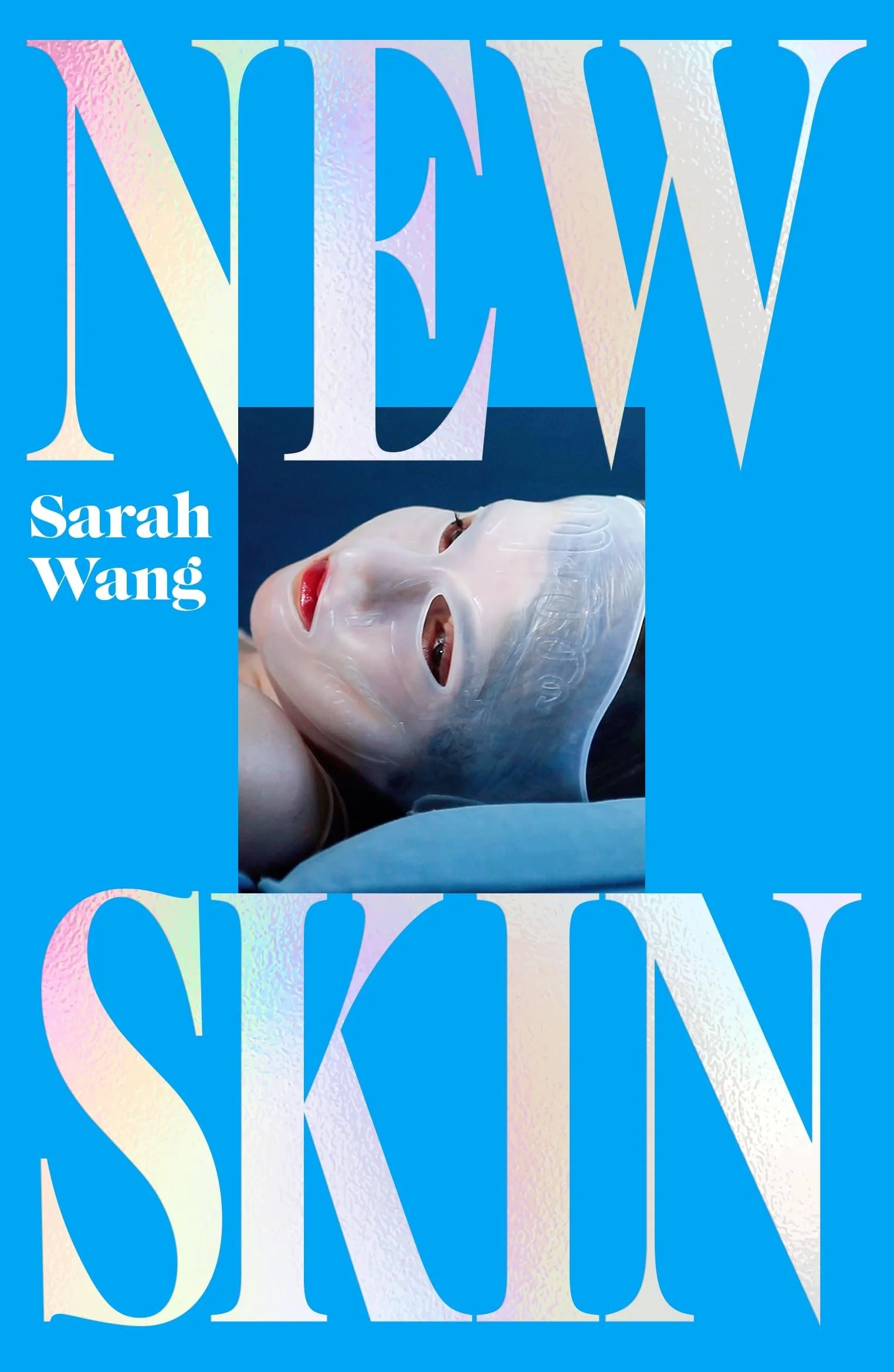
New Skin by Sarah Wang has been following me from the start of the year. Every other BookToker whose recommendations I trust seems to have picked it up, their reviews praising it for its exploration of beauty, identity and cosmetic surgery. Naturally, I couldn't resist. Beauty standards have fascinated me for years. In secondary school, I wrote my history final paper on beauty in Ancient Greece, and at university I ended up researching witchcraft and the centuries-old obsession with preserving youth and beauty. So when I discovered that New Skin tackles impossible beauty ideals, medical malpractice, and family conflict, I was convinced it would be the perfect novel for me.
Thank you to NetGalley, Picador and Pan Macmillan for the advanced copy!
Tell me more. What is the book about?
Linli, a second-generation Chinese American, is forced to put her academic life in New York on hold after her mother, Fanny, suffers a near-fatal complication following yet another cosmetic procedure.
Returning to Los Angeles is the last thing she wants. She and Fanny have spent years drifting apart, their conversations dissolving into arguments and resentment. Linli barely recognises the woman standing in front of her anymore. Years of surgeries have altered Fanny's face so dramatically every new visit is like meeting a stranger.
Yet Fanny isn’t done yet. She auditions for America's Beauty Extreme, a reality television competition offering contestants the chance to win a complete facial reconstruction. While Linli tries to convince her mother to give the treatments a rest, both women are forced to confront the lives they imagined for themselves, inherited expectations and the uncomfortable truth that neither of them knows how to love the other without trying to change them first.
What are some strong and weak points of the book?
Cosmetic surgery is so normalised nowadays that we rarely pause to question it. Procedures that once seemed extreme are now marketed as self-care. Social media filters redefine what a "normal" face should look like, and ageing itself has become a thing to resist rather than accept.
Fanny's obsession with beauty isn't born from the hope to reconstruct her face after an accident. She isn't hiding scars or trauma. The woman simply refuses to accept the person she is becoming.
After immigrating to America, watching her dreams slip away and feeling increasingly disconnected from both her daughter and herself, Fanny clings to the only thing she believes she can still control: her appearance. Even after repeated malpractice leaves her face permanently damaged, she continues searching for another surgeon, another procedure, another chance to become someone new. That, to me, is where the novel truly shines.
Fanny isn't chasing beauty as much as she is chasing escape. Every surgery becomes another attempt to leave an older version of herself behind. She does not want to preserve her identity; instead, she replaces it. The more she changes her face, the less she has to acknowledge the woman who sacrificed her ambitions, grew older than she wanted to and built a life that never quite resembled the one she hoped for.
I found myself thinking about art while reading this novel, as in, you know, that art imitates life. Art that is permanent and remains after its creator passes away. To describe cosmetic surgery as treating the body like a canvas would be difficult, because canvases eventually become finished. The paint on them dries. There is closure in art. However, Fanny's face refuses permanence. Every procedure paints over the last before it has the chance to exist on its own and to heal, thus creating an object of eternal incompletion. Fanny refuses to accept herself for who she is, and so she gets haunted by her own desires in a quite Dorian Gray manner.
I thought that was an incredibly compelling way of approaching beauty. Rather than asking why women want to be perceived as beautiful, Sarah Wang asks what happens when beauty becomes another form of reinvention.
With that in mind, I found the novel's ideas far more engaging than its characters. Maybe it is because I was so much more interested in Fanny and the focus was mainly on Linli.
Linli and Fanny spend much of the story trapped in repetitive arguments that blur together. Their difficult relationship is meant to be the emotional heart of the novel, yet it often distracted from what I found more compelling – conversations around immigration, ageing, cultural expectations, legacy and the desperate desire to change. Even Linli's character arc left me unconvinced. Watching someone so fiercely opposed to cosmetic surgery begin questioning her own appearance and going under the blade made her superficial, given everything she had witnessed her mother endure.
Any final thoughts? Should I read it too?
I don't think New Skin is really a book about beauty. It’s more about the fantasy of becoming another person. The novel explores the terrifying possibility that no amount of altering the outside can repair the parts of ourselves we have spent years trying to outrun. It asks whether reinvention is possible or whether we simply just our old selves beneath the new layers we create.
Perhaps the book didn’t quite hit for me because I came into it carrying expectations of my own. Whenever a novel promises to explore subjects you've spent years thinking about, it's impossible not to imagine the perfect version of it possible. Sarah Wang chose to tell a family drama. I found myself wanting the opposite: a novel that lingered on beauty and its dark obsessions.
That isn't a flaw in the novel so much as a reflection of the reader I happened to be.
If you are looking for a story about addiction, complicated mother-daughter relationships, and the impossible pressure to reinvent yourself in pursuit of happiness, I think New Skin is well worth picking up. I would love to hear whether you connected with Linli and Fanny more than I did, so please share your thoughts if you do so.
Thank you so much!! Are there any similar books that you can recommend?
Thinking about beauty and how corrupting it can be, I would recommend you check out the following:
💄 If I Had Your Face by Frances Cha – four young women in modern day South Korea battle social hierarchy and everyday problems while succumbing to a world that defines them by impossible beauty standards.
🪞 You Could Be So Pretty by Holly Bourne – Barbie meets The Handmaid’s Tale in this dystopian teen fiction about a universe where girls are divided into Pretty and Objectionable ones – those who conform to beauty standards, and those who rebel.
📲 limaistyping…
rating: ☀️☀️
tropes: 👯♀️ mother-daughter dynamic | 💋 beauty standards | 🇨🇳 Chinese-American | 🔪 plastic surgery | 🌏 immigration
read if you like: Botox, TLC’s My Strange Addiction, macaroni soup, Crazy Rich Asians, East Coast
look out for: 💆 leech therapy | 🔫 mafia boyfriend | 💀 multiple near-death experiences | ⚖️ a lawsuit | 🏦 6-figure debt
Reading this reminds you that no matter how much you argue with your mother or father or friends or other relatives it can always be worse.
tropes: 👯♀️ mother-daughter dynamic | 💋 beauty standards | 🇨🇳 Chinese-American | 🔪 plastic surgery | 🌏 immigration
read if you like: Botox, TLC’s My Strange Addiction, macaroni soup, Crazy Rich Asians, East Coast
look out for: 💆 leech therapy | 🔫 mafia boyfriend | 💀 multiple near-death experiences | ⚖️ a lawsuit | 🏦 6-figure debt
Reading this reminds you that no matter how much you argue with your mother or father or friends or other relatives it can always be worse.
