“Monsters” by Claire Dederer: Resisting The Attractive Villain (BOOK REVIEW)
Resisting The Attractive Villain
Hey, Alex! What have you been reading lately?
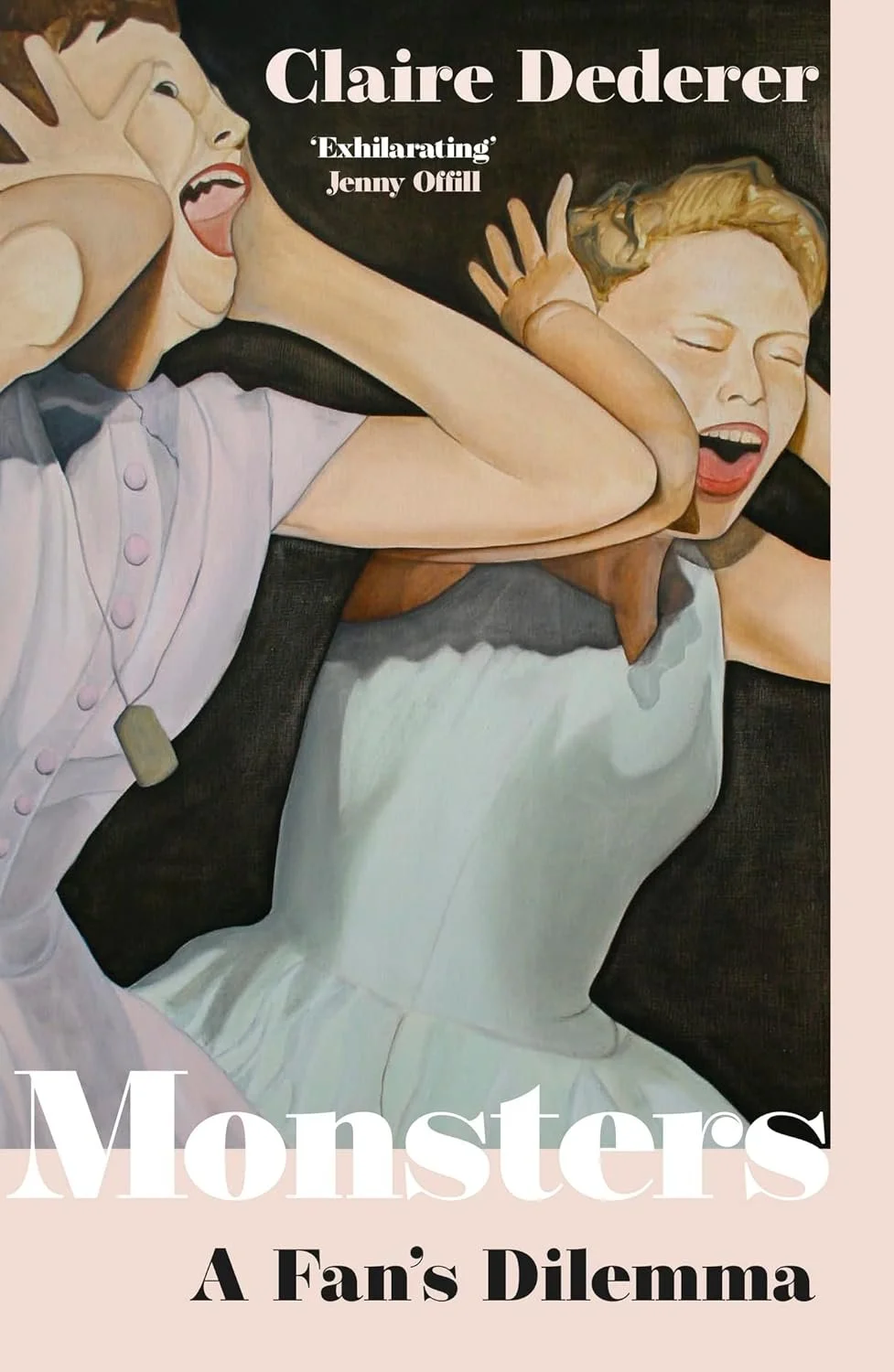
I am not an avid reader of non-fiction, but I have always been fascinated by badness. Cults, serial killers, cannibalism, public disgrace. Not because I admire cruelty, but because I am interested in how society responds to it. Who gets forgiven? Who gets ostracised? Which acts are excused in the name of genius, talent, beauty, or influence? And why? That is the territory Monsters by Claire Dederer explores.
This is a book that followed me around for months before I finally folded and bought it. I first spotted it in the gift shop of the National Gallery. I assumed it would be another straightforward study of art criticism and walked straight past it. But Monsters kept following me. I found it stacked on Waterstones shelves, on TikTok… I feel like it chose me to pick it up. Eventually, I was in a small independent bookstore in Brighton where I saw it for yet another time and took a copy with me home.
Tell me more. What is the book about?
What happens to a piece of art that is meaningful to us, but the person behind it has done something cruel, abusive, or morally indefensible? Do we stop engaging with the work? Do we continue consuming it with guilt? Or do we search for ways to justify the behaviour because we do not want to lose our emotional connection to the art?
In Monsters, Dederer moves through literature, film, music, politics, and art history to examine what makes someone a “monster” in the public imagination. Along the way, she discusses figures whose work shaped culture despite allegations of abuse, racism, misogyny, or violence.
Her central argument is that the word monster itself creates distance. A monster is someone strange, abnormal, separate from ourselves. Calling somebody monstrous allows people to point fingers without confronting their own contradictions. It is easier to exile others than to sit with the discomfort that we might not be that different from them. The book repeatedly asks whether badness is far more ordinary than we would like to admit. And whether we are all, deep down, monsters.
What are some strong and weak points of the book?
The strongest part of Monsters is the sheer number of ideas it throws at the reader. Every chapter introduces another uncomfortable question about morality, power, art, gender, and complicity. My copy is now filled with underlined passages and notes in the margins because the book constantly pushes you into conversation with yourself.
Dederer explores how male and female “monsters” are perceived differently, whether genius can exist without some form of destruction attached to it, and why society remains mesmerised by troublesome figures.
One section I found particularly interesting focuses on cancel culture and power. Dederer points out that people cannot truly “cancel” someone insignificant. Public condemnation only works when the person already holds influence over culture. In some ways, outrage reinforces their importance rather than diminishing it.
Another idea that stayed with me is the treatment of the past as a monster in itself. There is comfort in believing humanity has evolved beyond racism, sexism, homophobia, and violence. That previous generations “didn’t know better.” But Dederer questions whether this belief is honest at all. Treating the past as evil can become another way of protecting ourselves from examining present-day complicity.
What I appreciated most is that the book refuses to hand readers a clean moral conclusion. It does not tell you which artists to forgive or which ones to erase. Instead, it lays out the discomfort in full and asks readers to decide what they can live with.
At the same time, that restraint is also what weakened Monsters for me.
There were moments where I wanted Dederer to take greater risks and push her arguments further. The writing often circles ideas cautiously rather than committing to them to the core. Words like maybe, perhaps, and repeated reminders that these are only the author’s personal takes make the voice vague and hesitant at times.
Ironically, it almost feels as though the author is afraid of becoming monstrous herself by being too opinionated. But this is a book about monsters. I wanted danger and confidence. I wished Dederer would stand on thin ice more and share difficult ideas without softening their edges. Because of that, Monsters feels less like a manifesto and more like an invitation for discussion. Reading it is only one part of the conversation. The other, more important one, is left to the readers and what they take from the book and carry into their lives thereafter.
Any final thoughts? Should I read it too?
Absolutely! If you are interested in art criticism, media culture, morality, or the psychology behind public outrage, this is the book for you.
Monsters is not a guide on good and evil. It offers no universal answer on whether we should separate art from the artist or where our moral responsibility as consumers begins and ends. Instead, it maps out our different responses to badness and asks why we are so drawn to it in the first place.
More than anything, the book understands that human beings are uncomfortable contradictions. We crave morality while remaining fascinated by its destruction. We condemn powerful people while still consuming their creations. We build monsters, get drawn to them, fear them, and every once in a while recognise parts of ourselves within them.
Even when I disagreed with Dederer’s approach, I could not stop thinking about the questions she raised. And I suspect that is where the real power of the book lies – not inside its half-answers, but in the conversations it leaves behind once you close it.
Thank you so much!! Are there any similar books that you can recommend?
✍️ The Death of the Author by Roland Barthes – a foundational literary essay questioning whether an author’s intentions and identity should shape how we interpret their work.
💬 Wordslut by Amanda Montell – a sharp and accessible study of language, gender, power, and the ways words shape social behaviour and reactions to it.
📲 limaistyping…
rating: ☀️☀️☀️
tropes: 🧑⚖️ criticism | 🎨 art & culture | ✊ feminism | 👼 good vs bad | 🎉 fandom
read if you like: Roland Barthes, Colleen Hoover, Michael Jackson, Virginia Woolf, Sylvia Plath
look out for: 👹 your idol’s dark secret | 🍒 Lolita essay | 🤬 female rage | 😕 disappointment | 🪽 inner peace
Reading this feels like you are searching for a monster to blame just because you are scared to admit you are one yourself.
tropes: 🧑⚖️ criticism | 🎨 art & culture | ✊ feminism | 👼 good vs bad | 🎉 fandom
read if you like: Roland Barthes, Colleen Hoover, Michael Jackson, Virginia Woolf, Sylvia Plath
look out for: 👹 your idol’s dark secret | 🍒 Lolita essay | 🤬 female rage | 😕 disappointment | 🪽 inner peace
Reading this feels like you are searching for a monster to blame just because you are scared to admit you are one yourself.
