“Sail Away Land” by Ben Pester: An Invitation To Get Lost (BOOK REVIEW)
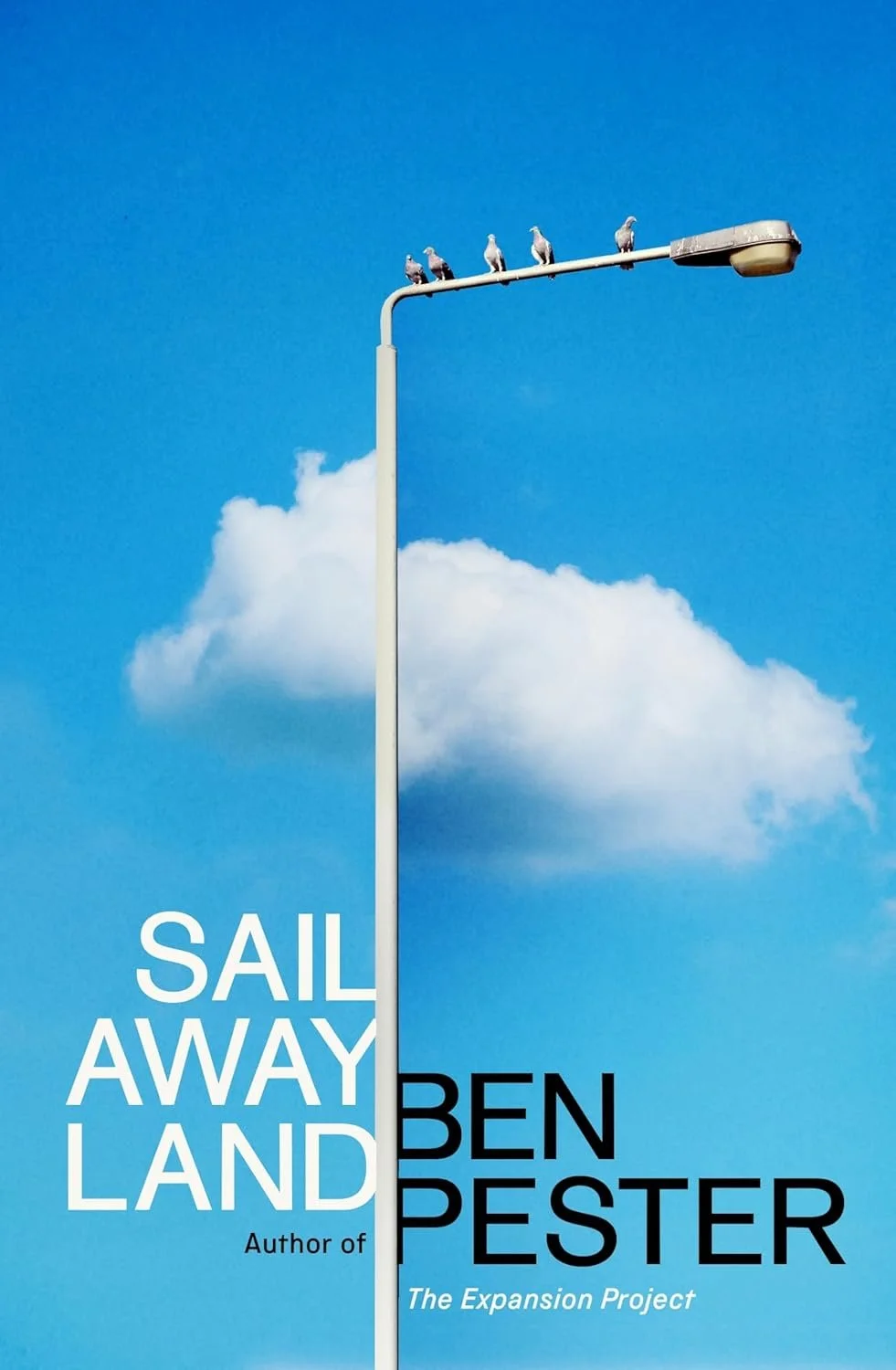
An Invitation To Get Lost
Hey, Alex! What have you been reading lately?
As a reader, I often find myself drifting away while reading. I sit down with a book, turn two pages, and come to realise that although my eyes are moving across the words, my mind has wandered somewhere else – I replay memories from my own life, imagine conversations, think about things that have nothing to do with the story in front of me.
That feeling sits at the very centre of Sail Away Land by Ben Pester, which was kindly sent to me in advance by NetGalley and Granta Books. The collection is interested in what happens when we allow ourselves to lose focus and daydream. For a moment, it asks us to step out of reality and follow wherever the mind leads us.
Tell me more. What is the book about?
Sail Away Land is a surreal and deeply introspective short story collection that explores the strange inner worlds people create for themselves while trying to survive ordinary life. Across offices, dinner parties, emails, televisions, family tensions, and awkward conversations, Pester looks at the gap between the lives we perform and the ones unfolding quietly inside our heads.
The “sail away land” itself becomes many things throughout the collection. It feels like the place we go to before we are born or after we die. The place grief sends us to when we miss someone. A refuge for anxious minds. A private escape from work, routine, and expectation. Somewhere between freedom and isolation.
One story follows a television trying to construct a personality profile of its owner based on the programmes they watch. Another begins with a coworker emailing to say that the ghost of the narrator’s estranged sister is haunting his house. In a third story, a character becomes so consumed by planning the perfect dinner for his friends that they lose the ability to actually enjoy being with them.
The stories move between magical realism, satire, and emotional confession with a kind of controlled chaos that feels fresh and impossible to predict.
What are some strong and weak points of the book?
What impressed me most about Sail Away Land is how alive its stories feel. There is movement in every sentence, as though the pages themselves are restless. Pester captures the pace and overstimulation of modern life while still making space for longing, loneliness, and imagination.
A large part of the collection focuses on work and productivity: the pressure to contribute, collaborate, create, and function within a system. Against that stands the rebelliousness of dreaming. The characters in Sail Away Land are often distracted, anxious, detached, or emotionally absent. Their inner lives resist structure even when the world around them demands efficiency.
Another recurring theme is performance. Many of the protagonists feel trapped by the versions of themselves they present to friends, coworkers, and family members. They overshare, rush through conversations, panic over social interactions, and struggle to fit into expectations that feel too narrow to contain them.
For me, Sail Away Land became a metaphor for freedom – a place where identity dissolves and people can become nobody and everybody at once. The book also understands that escape can turn into its own kind of prison. Some characters disappear so deeply into themselves that returning to reality feels almost impossible.
I really enjoyed Pester’s use of second-person narration in several stories. The narrator speaks directly to the reader without immediately revealing what our role is or why we matter to the story. There is a certain intimacy to that choice. Even when the characters are chaotic or difficult to follow, there is still a desire for connection underneath it all. They want to speak to somebody. To be heard. And that someone is the reader.
The only thing that weakened the collection for me overall is that some stories are intentionally unfinished. Many of them revolve around characters being lost in thought. They rely more on the emotional movement of the mind rather than physical plot development. I think that unresolved quality is part of the point sometimes. Daydreams rarely end neatly. We are often pulled out of them without warning and forced back into reality before we are ready.
Any final thoughts? Should I read it too?
I would recommend Sail Away Land to readers who enjoy fiction that is experimental, emotional, and slightly disorienting in the best way possible. It is playful, strange, and full of ideas that linger long after its individual stories end.
This is not a collection interested in giving readers certainty. Instead, it invites you to sit inside confusion, memory, anxiety, and imagination and see what rises to the surface. The stories inside ask what it means to be human in a world that rarely allows you the time to stop and think.
It is a book about getting lost, but also about wanting someone to get lost alongside you. It’s an invitation that I accepted with no hesitation, and I hope you do, too.
Thank you so much!! Are there any similar books that you can recommend?
🌍 Earthlings by Sayaka Murata – a bizarre and unsettling Japanese novel about social alienation, childhood trauma, and going mad while trying to survive in a world that demands conformity.
🪨 Stone Mattress by Margaret Atwood – a collection of speculative short stories that explore complex human relationships through revenge, memory, ageing, and more.
📲 limaistyping…
rating: ☀️☀️☀️☀️
tropes: 📚 short stories | 😂 humour | 📌 work environment | 💭 lost in thoughts | 🎭 performative identity
read if you like: daydreaming, letter writing, big gatherings, side quests, TV marathons
look out for: 🎾 a tennis match | 👻 domestic ghosts | 🧖 amazing face cream | 👨 stepfathers | 🍊 resurrection ritual
Reading this feels like you are late to leave the house but remember there is laundry that needs to be taken out the washing machine, the phone is ringing, and you simply sit there dreaming about a world where you need not rush.
tropes: 📚 short stories | 😂 humour | 📌 work environment | 💭 lost in thoughts | 🎭 performative identity
read if you like: daydreaming, letter writing, big gatherings, side quests, TV marathons
look out for: 🎾 a tennis match | 👻 domestic ghosts | 🧖 amazing face cream | 👨 stepfathers | 🍊 resurrection ritual
Reading this feels like you are late to leave the house but remember there is laundry that needs to be taken out the washing machine, the phone is ringing, and you simply sit there dreaming about a world where you need not rush.
