“Natural Disaster” by Lisa Owens: Motherhood At Its Realest (BOOK REVIEW)
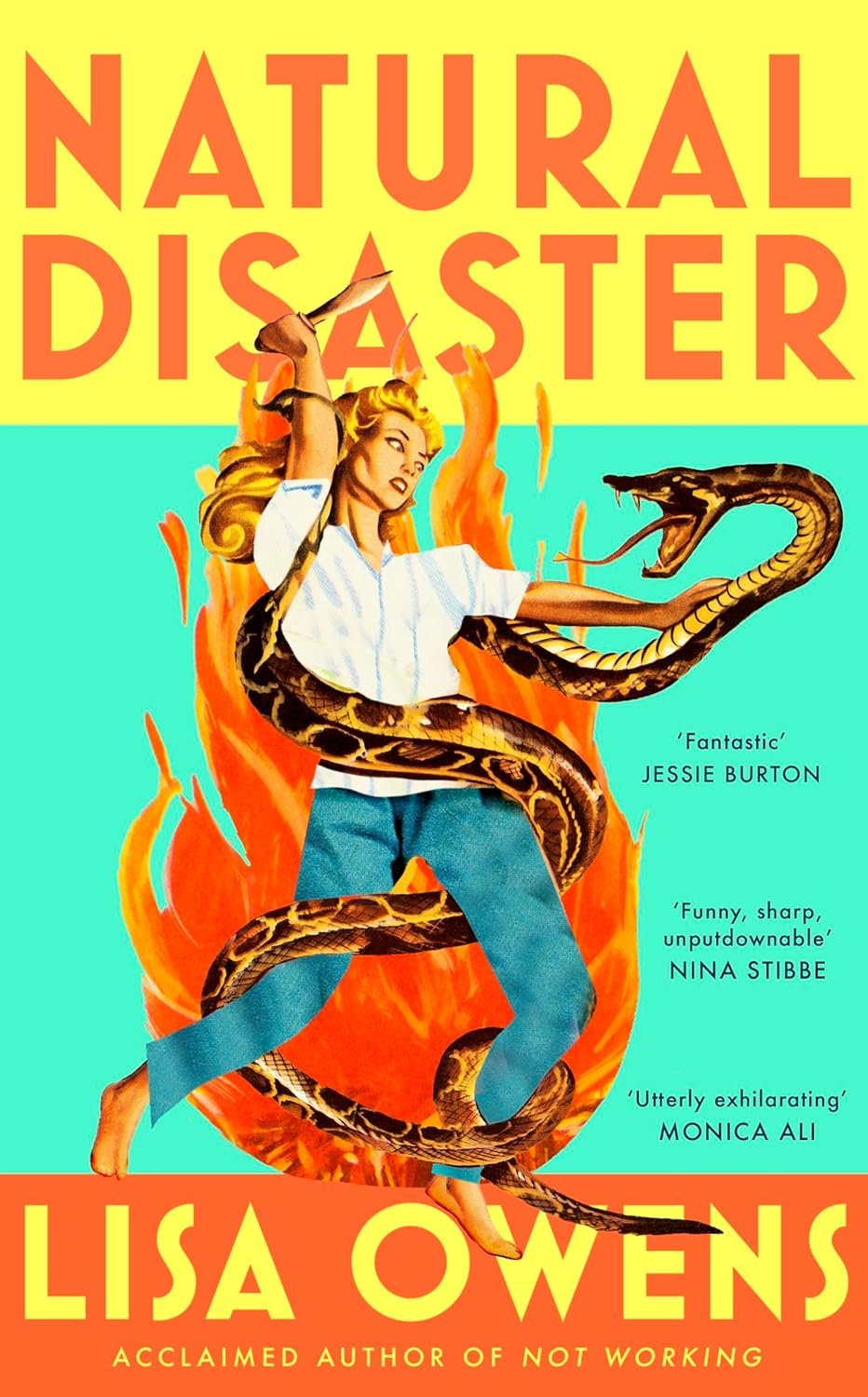
Motherhood At Its Realest
Hey, Alex! What have you been reading lately?
Confession time: I work at a nursery in London. Every week children grow up in real time around me while I also observe the adults that pick them up. Some parents run in late from work, exhausted. Some mothers hold two children at once, push a stroller and talk on the phone at the same time. After two years in childcare, I feel like I have accidentally collected an archive of modern parenthood.
So the second I came across Natural Disaster by Lisa Owens, a book that I received through NetGalley and Little, Brown Book Group (Virago Press), I knew I wanted to dive right into it. Natural Disaster brings together the anxieties parents carry home, the fears they never say out loud, and the small accomplishments of getting their little ones to listen to them for once.
Tell me more. What is the book about?
Natural Disaster follows an unnamed mother of two over the course of twenty-four increasingly chaotic hours. It is the final day before she returns to work full-time after maternity leave, and she is desperate to have one last perfect memory with her sons before life changes again.
Instead, everything goes wrong. Her husband is away, her children are testing every limit of her patience, and a series of accidents leave her questioning whether she will be able to return to work at all.
Sharp, funny, and devastating, Natural Disaster captures the reality of modern motherhood with startling honesty.
What are some strong and weak points of the book?
The protagonist is as human as she can possibly get. Owens understands the exhausting mental load motherhood carries. This is not just a woman dealing with two hyperactive boys; it is a woman trapped inside a mind that never stops moving.
She overthinks everything: breakfast choices; schedules; safety; other people’s opinions. At one point she worries that a neighbour she borrowed a thermometer from might report her to child protection services for negligence. Her fears grow, yet she keeps going forward because there is no real alternative. The children still need feeding, comforting, entertaining, and taking care of.
There is a superhuman aspect to all mothers, and the novel understands that without romanticising it. The protagonist is overwhelmed, frustrated, isolated, and exhausted, but even in the middle of a meltdown she continues putting her children first.
Another thing worth mentioning is Owens’ decision to leave the protagonist unnamed. At first, it unsettled me. I realised that all nameless protagonists in literature I have encountered in the past year have been women. It is uncomfortable to watch female identity dissolve into universality like that.
But in Natural Disaster, the choice is intentional and painfully effective. The woman has become so consumed by motherhood that her individual self disappears beneath it. Before she gave birth, she probably had ambitions, dreams, hobbies, perhaps even versions of herself she no longer recognises. Now she exists entirely in relation to others.
That is why setting the novel on the eve of her return to work is such a smart decision. She is suspended between identities. Part of her wants to reconnect with the person she used to be, to be herself again after a long break, while another part fears what stepping away from motherhood, even briefly, might erase her completely.
What makes Natural Disaster especially powerful is that Owens does not offer perfection or resolution. We never find out whether the protagonist manages to return to work, but strangely, that absence did not frustrate me. By the end, I was simply grateful to have spent time inside the world she is part of.
Any final thoughts? Should I read it too?
Yes yes YES. Natural Disaster is by far the most sincere portrayal of motherhood I have read. It understands parenting not as a series of milestones or sentimental moments, but as a constant balancing act between love, guilt, exhaustion, responsibility, and the desire to remain a person outside of caregiving.
It is also unexpectedly hopeful. Beneath the anxiety and chaos, the novel suggests that perfection was never the goal to begin with. Families survive through improvisation, support, and learning how to forgive themselves for falling apart sometimes.
Owens has written a book that is intimate without becoming overly dramatic. A small story on the surface, but one that carries enormous emotional weight.
Thank you so much!! Are there any similar books that you can recommend?
🩹 Little Scratch by Rebecca Watson – a fragmented, anxious stream-of-consciousness novel following a woman trying to survive an ordinary workday while carrying private trauma.
🪦 I’m Glad My Mom Died by Jennette McCurdy – a brutally honest memoir about motherhood, control, identity, and the complicated relationship between caregiving and selfhood.
📲 limaistyping…
rating: ☀️☀️☀️☀️☀️
tropes: 🤰 parenthood | 📆 day in the life | 🐥 maternity leave | 🔮 unpredictable fate | ✊ feminism
read if you like: multitasking, healthy cooking, crash outs, bending rules, iPads
look out for: 🌡️ a thermometer | 🎨 The Teletubbies | 🍼 toddlers lingo | 🩸 a misplaced tampon | 🍫 vending machine sugar rush
This book feels like suffocating on the warmest day of the year but you are so sick you have to melt your last ice cream stick in the microwave to enjoy.
tropes: 🤰 parenthood | 📆 day in the life | 🐥 maternity leave | 🔮 unpredictable fate | ✊ feminism
read if you like: multitasking, healthy cooking, crash outs, bending rules, iPads
look out for: 🌡️ a thermometer | 🎨 The Teletubbies | 🍼 toddlers lingo | 🩸 a misplaced tampon | 🍫 vending machine sugar rush
This book feels like suffocating on the warmest day of the year but you are so sick you have to melt your last ice cream stick in the microwave to enjoy.
