“Upward Bound” by Woody Brown: On Challenging Life And Feeling Alive (BOOK REVIEW)
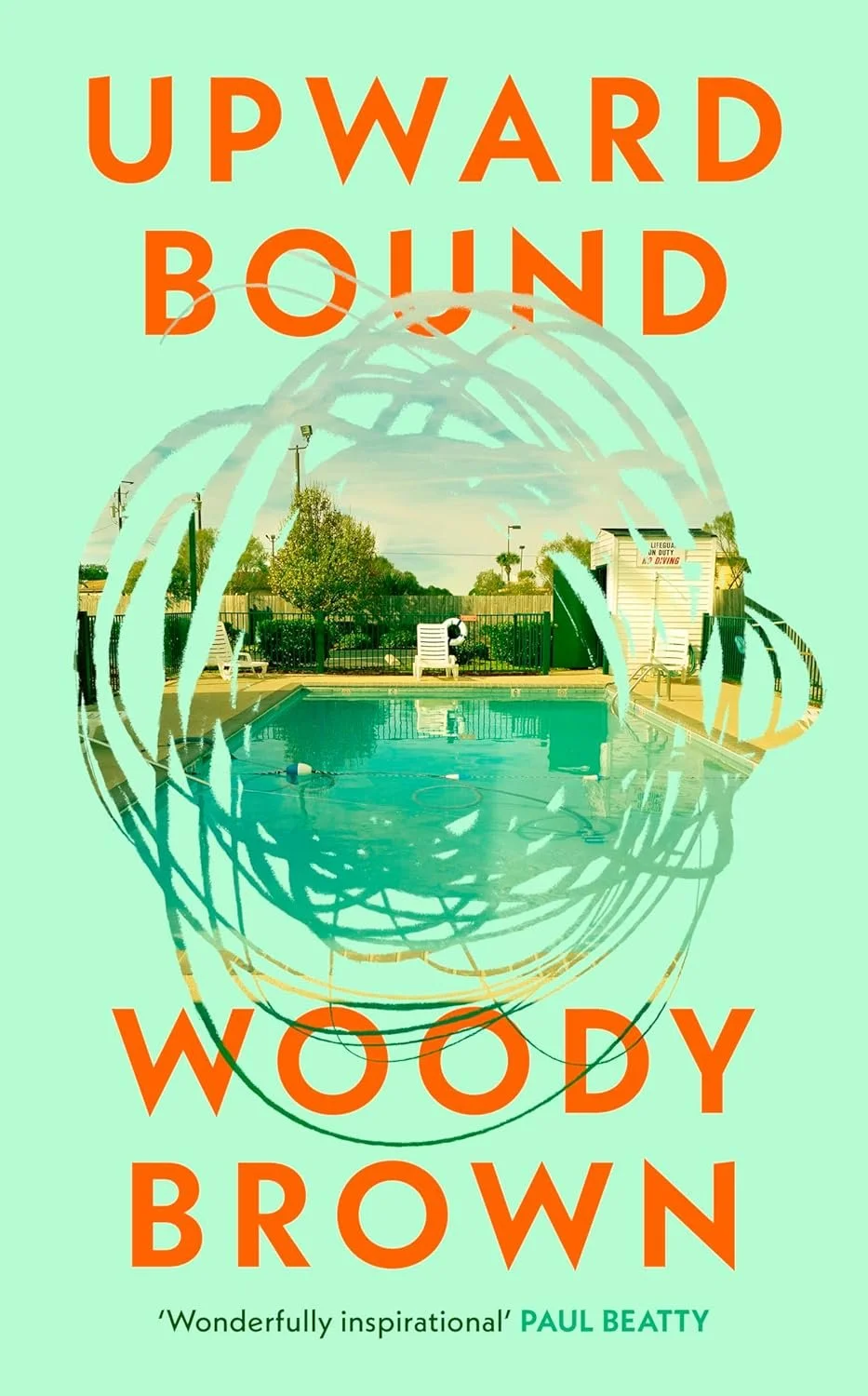
On Challenging Life And Feeling Alive
Hey, Alex! What have you been reading lately?
I’ve developed a serious problem with NetGalley over the past few months. My issue is it introduces me to too many good books to the point where I physically do not have the time to read them all.
Upward Bound by Woody Brown was one of those titles that immediately caught my eye. This year I told myself I wanted to read more debut authors and pick up stories centred on experiences I haven’t explored much before. This novel ticked both boxes, and I am so glad it found its way to me.
Funny, moving, and unexpectedly sharp, Upward Bound reminded me that the places society tends to overlook are often the very places most full of life, complexity, and something worth remembering.
Tell me more. What is the book about?
Upward Bound is set in an adult day-care centre in Southern California, the sort of place nobody particularly wants to be in.
Not the clients, many of whom are autistic, non-speaking, physically disabled, or otherwise pushed to the margins and kept behind the centre’s closed doors. Not the workers either, who may mean well, but still infantilise the people in their care and limit their access to genuine pleasure or independence.
The novel follows roughly a year inside this world through multiple perspectives. It resembles a collection of stories all taking place in the same confined space, where friendships form, tensions build, routines calcify, and small rebellions begin to take shape.
What are some strong and weak points of the book?
The strongest part of the novel is easily its characters.
I went in knowing almost nothing about the plot and was instantly pulled in by how loud, vivid, and expressive everyone felt. We meet a man who cannot speak but communicates through alternative methods and is academically brilliant, though still forced to spend his days at the centre. Then a man with cerebral palsy nursing feelings for one of the summer staffers. More voices and histories come to daylight as the story progresses and lives inside Upward Bound that intersect in unexpected ways.
Each character feels specific rather than symbolic. They aren’t there to “teach lessons” to the reader. They are funny, frustrating, flirtatious, bitter, intelligent, lonely, mischievous, and deeply human.
Brown also handles the surrounding ecosystem well: the exhausted families, the young adults who take jobs there, the compromises carers make, and the emotional labour required to support others while trying to hold yourself together.
What impressed me most was the honesty. The book does not sentimentalise disability or package hardship into something neat and inspirational. It is messy, repetitive, unfair, boring at times, hilarious at others. Real life, basically.
And yes – it is hilarious. Sometimes darkly so. Brown clearly understands comedy and knows how to use it without undercutting the seriousness of what he is depicting.
If I had one criticism, it’s that some sections interested me more than others, and the ending didn’t give me the neat sense of closure I was hoping for. But the more I sat with it, the more that felt intentional.
For me, Upward Bound is a story with a beginning and an end because I am entering and leaving it as a reader. For many people like the characters – and for the author, whose own life informs the material – this is not a contained narrative arc. It is life. Ongoing, cyclical, unresolved. So it makes sense that the ending hangs open. The centre will still be there next year. The routines will continue. The frustrations, jokes, and small signs of joy will happen again. Once I understood that, the ending became one of the novel’s most honest choices.
Any final thoughts? Should I read it too?
Absolutely. This has been one of the most important books I’ve read this year. Not because it shouts at you to learn something new, but because it quietly changes how you look at people, communication, patience, autonomy, and what it means to live a full life.
So much of the novel revolves around disappointment: clients and staff alike feeling trapped in routines that do not challenge them, improve them, or recognise their adulthood. They want stimulation. Growth. Freedom. To be treated as people with desires and potential rather than problems to be dealt with.
That tension is there from the opening, when one character disappears and the disruption sends ripples through everyone else. Breaking routine becomes an act of rebellion.
The wider world often dismisses disabled people because it measures worth against narrow standards of productivity, speed, and conventional independence. Brown pushes back against that thinking. He reminds us that comparison is useless, that every life has its own shape, and that vitality still exists in the places we often not notice.
Saying I “liked” Upward Bound almost feels too small of a comment. I admired it, learned from it, laughed with it, and will keep thinking about it.
A powerful debut indeed, and I am very excited to see where Woody Brown goes next.
Thank you so much!! Are there any similar books that you can recommend?
🌞 I’ll Give You the Sun by Jandy Nelson – once-inseparable twins drift apart after tragedy and struggle try to reconnect through grief, art, and first love.
🧠 It’s Kind of a Funny Story by Ned Vizzini – after checking himself into a psychiatric hospital, an overwhelmed teenager begins to understand mental health, friendship, and what it means to keep going.
📲 limaistyping…
rating: ☀️☀️☀️
tropes: ❤️🩹 disability | 🗣️ non-speaking characters | 👣 underrepresented voices | 🍎 slice-of-life | 🎭 humour
read if you like: psychology, swimming, pantomimes, killing time, routine
look out for: 🏖️ summer vacancies | 🎪 Holiday Spectacular | 📖 aspiring author | 🧑🧑🧒 difficult parents | 🏋️ overstimulation
Reading this is like coming out from a dip at the pool during a seemingly never-ending summer – refreshing, exciting, energising.
tropes: ❤️🩹 disability | 🗣️ non-speaking characters | 👣 underrepresented voices | 🍎 slice-of-life | 🎭 humour
read if you like: psychology, swimming, pantomimes, killing time, routine
look out for: 🏖️ summer vacancies | 🎪 Holiday Spectacular | 📖 aspiring author | 🧑🧑🧒 difficult parents | 🏋️ overstimulation
Reading this is like coming out from a dip at the pool during a seemingly never-ending summer – refreshing, exciting, energising.
