“Transcription” by Ben Lerner: The Burden To Memorise (BOOK REVIEW)
The Burden To Memorise
Hey, Alex! What have you been reading lately?
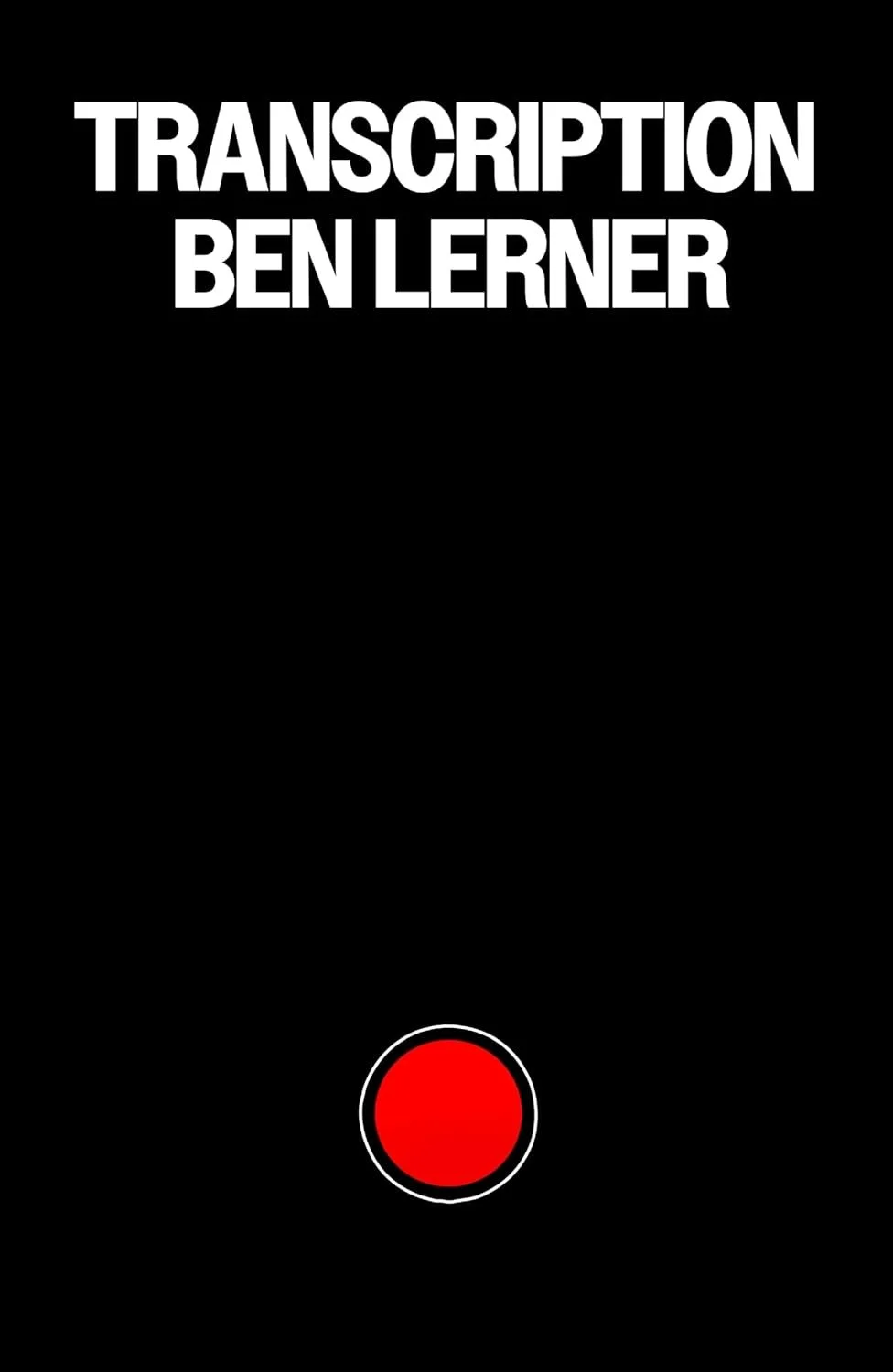
I picked up Transcription because of the clever way it was presented to me. A minimalistic cover, and a QR code on the very first page leading to a transcript from Ben Lerner himself, reflecting on the novel, its themes, and why he wrote it.
It felt intentional. Almost like the book was asking me a question before I had started reading it: what does it mean to record something? To preserve it and to remember it?
Having read The Hatred of Poetry by Lerner before, I knew that he could write well. What I didn’t know was how that talent would translate into fiction, and I was curious to find out. That is when Transcription came into the picture.
Tell me more. What is the book about?
The narrator of Transcription travels to conduct one final interview with a 90-year-old writer and acquaintance, Thomas. Upon arrival, he drops his phone in the bathroom sink and loses his recording device. And just like that, the entire structure collapses.
As Thomas’ speech wanders, loops, and contradicts itself, the narrator struggles to keep up. Not just with the conversation, but with what it represents. Technology, memory, authorship, identity, fatherhood, masculinity… all begins to blur.
What unfolds isn’t a plot-driven story, but a kind of intellectual spiral. A conversation that becomes an excavation: of the past, of the self, of what it means to be able to remember, and whether that is still possible at all.
What are some strong and weak points of the book?
Lerner’s writing is, without exaggeration, masterful. He has this rare ability to take something abstract and give it shape. There is a rhythm to his sentences, a kind of controlled chaos that mirrors the very ideas he is exploring. Memory slips, thoughts collide, themes appear and disappear almost faster than you can process them.
And yet, it never feels heavy. In fact, that lightness is part of what impressed me most. There is so much happening on the page and still, it flows easily.
The exploration of memory, in relation to technology, is where the book truly shines for me. That quiet anxiety that our brains are so overstrained by the amount of media we consume daily that there is too much we need to remember. That idea stayed with me. What didn’t were the characters.
The narrator, in particular, is distant. There are moments of vulnerability where he opens up about the hardships of fatherhood, his daughter’s eating disorder, and his sense of failure that are, without a doubt, compelling. But outside of that, he is… elusive. I was not invested in him and didn’t care what would happen to him.
His fixation on the broken phone – the need to feel it, to reach for it, to “use” something that no longer works – is exaggerated to the point of distraction. For a man in his late forties, someone who has lived before this level of technological dependence, it feels out of place. Were he a young adult straight out of college, it would have been more believable, maybe. But instead he comes across as immature. That made it harder for me to stay emotionally invested and I realised I just lost interest in him as I kept reading.
Any final thoughts? Should I read it too?
Transcription is one of those books I respect more than I like.
It is thoughtful, ambitious, and intelligent. A deep dive into memory, technology, and the difficulty of staying present in the moment.
It is a book that asks a lot from its reader. While turning the pages, I kept questioning myself: how do you capture a conversation in its entirety if you can’t record it? How do you transcribe memory in real time, knowing memory itself is unstable?
If you enjoy philosophical fiction or something ambiguous and introspective, then Transcription will likely resonate with you.
For me, my introduction to Lerner’s fiction reminded me of watching something brilliant happen from afar. I could see it and admire it, but I wasn’t a part of it. I like the idea of it more than the story itself.
Maybe it’s a timing thing. Maybe I am to blame for feeling so distanced from the characters. I believe the truth lies in the middle and that there are certain books we are sometimes not ready to consume or fully enjoy but remain with us regardless.
Thank you so much!! Are there any similar books that you can recommend?
📚 The Plot by Jean Hanff Korelitz – a thriller that explores the ideas of authorship, ambition, and the blurred lines between originality and theft.
🧠 Still Alice by Lisa Genova – a deep dive into human memory, identity, and what happens when both begin to slip away in a domestic setting.
📲 limaistyping…
rating: ☀️☀️
tropes: 🐾 stream of consciousness | 🧠 memory | ⏮️ reflective prose | 💻 technology and the mundane | 🥧 nostalgia
read if you like: overthinking, Madrid, hotel hopping, interviews, philosophy
look out for: 🍚 a bowl of rice | 📱 new phone | 🧑🧒🧒 parenting advice | ✊ little victories | 🧐 words to add to vocabulary
Reading this feels like you are doing a Listening exam and trying to recount every little detail from the 2-minute transcript that was played to you once on a topic that couldn’t be further away from your interests.
tropes: 🐾 stream of consciousness | 🧠 memory | ⏮️ reflective prose | 💻 technology and the mundane | 🥧 nostalgia
read if you like: overthinking, Madrid, hotel hopping, interviews, philosophy
look out for: 🍚 a bowl of rice | 📱 new phone | 🧑🧒🧒 parenting advice | ✊ little victories | 🧐 words to add to vocabulary
Reading this feels like you are doing a Listening exam and trying to recount every little detail from the 2-minute transcript that was played to you once on a topic that couldn’t be further away from your interests.
