“Everything I Know About Love” by Dolly Alderton: Love Letter To Your Twenties (BOOK REVIEW)
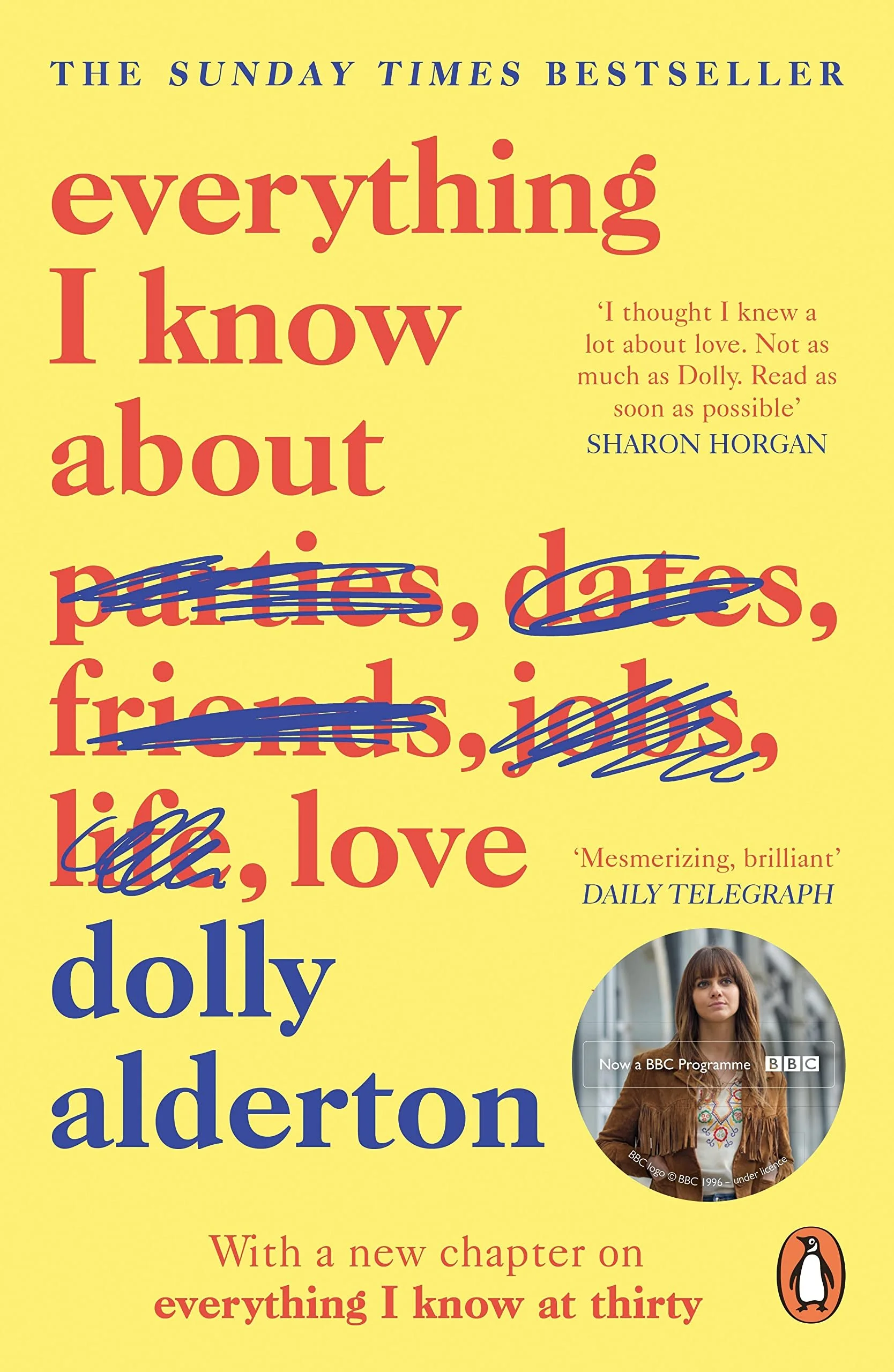
Love Letter To Your Twenties
Hey, Alex! What have you been reading lately?
If I got a pound for every time I laughed out loud while reading Dolly Alderton on the tube, I wouldn’t be a millionaire, but I’d be a rich man nonetheless. This book is that funny, that sharp, and that alive.
What pulled me in wasn’t just Alderton’s voice (which I find instantly addictive), but her ability to recount moments from her past with such vivacity and precision that nothing ever feels dull or indulgent. There’s movement on every page. Even when she lingers, the narrative never slows – it deepens.
I am oddly grateful I read this book in February. The so-called month of love. Or, as I’d reframe it: the month where you think you’re finally getting off a rollercoaster, only to be told there is one more loop, and another one after that. In a way, that’s exactly what this book feels like to me – a loving, confusing, vulnerable note to your twenties, to your friends, to your family, and most importantly, to yourself.
Tell me more. What is the book about?
In her debut memoir, Dolly Alderton takes us through her twenties by examining the relationships that shaped her. That is lovers, one-night stands, best friends, flatmates, family, and the versions of herself she outgrew along the way.
This is not a neat coming-of-age story. It’s chaotic, intimate, non-linear. It’s a labyrinth we all unknowingly enter and eventually start to call home. Alderton reflects on late nights, house moves, money issues, too much drinking, deep friendships, heartbreaks that feel terminal, and the quiet fear of being left behind as others move forward.
Expect laughter, joy, tears, and that strange relief that comes from realising: oh! it’s not just me.
What are some strong and weak points of the book?
Structurally, this book is a joy. Part recipe book, part email archive, part diary, part memoir, part occasional writing guide, Everything I Know About Love refuses to be boxed in, and somehow never feels repetitive. Every chapter earns its place.
One of Alderton’s biggest strengths is people. She names a lot of friends in this memoir (and trust me, I am terrible with names), yet she introduces and revisits them so fluidly that each is distinct. By the end, they don’t feel like her friends. They feel like your own ones, or like people you’ve known in different forms throughout your life.
Reading Everything I Know About Love made me feel closer to Dolly, but also closer to myself. Because it’s through reflecting on our relationships with others, and recognising shared experiences, that we are forced to confront who we are at our most uncomfortable.
Reading this after having read Good Material last August added an extra layer to the story for me. I kept having moments of “Damn! Andy would absolutely act like this”. Seeing how Alderton has transformed the ghosts of her twenties into fiction later on feels liberating, creative, and deeply hopeful. Pain doesn’t just pass, it becomes material. Good material, like in her fictional project that is about turning our sad experiences into something positive that can inspire laughter.
That said, Everything I Know About Love is not a self-help book. I didn’t find the advice life-changing and I don’t think it’s meant to be. It’s less of a guidance for the reader and more of a letter Alderton wrote to herself in order to move on. Writers write for selfish reasons, and here that honesty works in the book’s favour. Alderton writes to surrender. And in doing so, she purges.
The author doesn’t shy away from uncomfortable truths either: jealousy towards friends’ partners, loneliness masked as independence, comparison, resentment, longing. The things we are all thinking, but rarely admit out loud.
Any final thoughts? Should I read it too?
Everything I Know About Love will not make you a better person. It won’t tell you to hang in there. It won’t promise that every mistake is a lesson neatly wrapped in meaning. And it won’t define what love is for you.
What it will do is remind you that we all go through the same mess at some point. That none of us are uniquely broken. That being in your twenties, or expecting or remembering them, is a strange mix of chaos, fearlessness, tenderness, and spontaneity.
This book is about connection. About feeling less like a hopeless romantic and more like someone actively walking toward their happy ending.
I’ll end this with a quote from the book I am sure will resonate with me for a long time: “I am always half in life, half in a fantastical version of it in my head.”
Read Everything I Know About Love not to learn what love is. Read it so you feel less alone in figuring the answer out.
Thank you so much!! Are there any similar books that you can recommend?
💄 Sex and the City – four women in New York navigating love, friendship, and independence while pretending they have it all figured out.
📓 Bridget Jones’s Diary – a painfully honest, hilarious chronicle of romantic delusion, self-sabotage, and learning to like yourself anyway.
📲 limaistyping…
rating: ☀️☀️☀️☀️☀️
tropes: 🐣 autobiography | ⏮️ reflective prose | 🎭 masks falling | 🏁 try & error | ❤️ friends, family, self
read if you like: Audrey Hobert, dingy pubs in Camden Town, (casual) dinner parties, bins & recycling, romanticising your 20s
look out for: 🪩 nightmarish nights out | 👩❤️💋👨 awful dating experience | 🍳 recipes for the heart & stomach | 🧻 Kleenex boxes at your therapist | 😳 an intimacy coach scared of intimacy
Reading this is the reassuring sign that you are not alone in the craziness we call life.
tropes: 🐣 autobiography | ⏮️ reflective prose | 🎭 masks falling | 🏁 try & error | ❤️ friends, family, self
read if you like: Audrey Hobert, dingy pubs in Camden Town, (casual) dinner parties, bins & recycling, romanticising your 20s
look out for: 🪩 nightmarish nights out | 👩❤️💋👨 awful dating experience | 🍳 recipes for the heart & stomach | 🧻 Kleenex boxes at your therapist | 😳 an intimacy coach scared of intimacy
Reading this is the reassuring sign that you are not alone in the craziness we call life.
