“Dandelion Is Dead” by Rosie Storey: It Is Never Too Late To Be Alive (BOOK REVIEW)
It Is Never Too Late To Be Alive
Hey, Alex! What have you been reading lately?
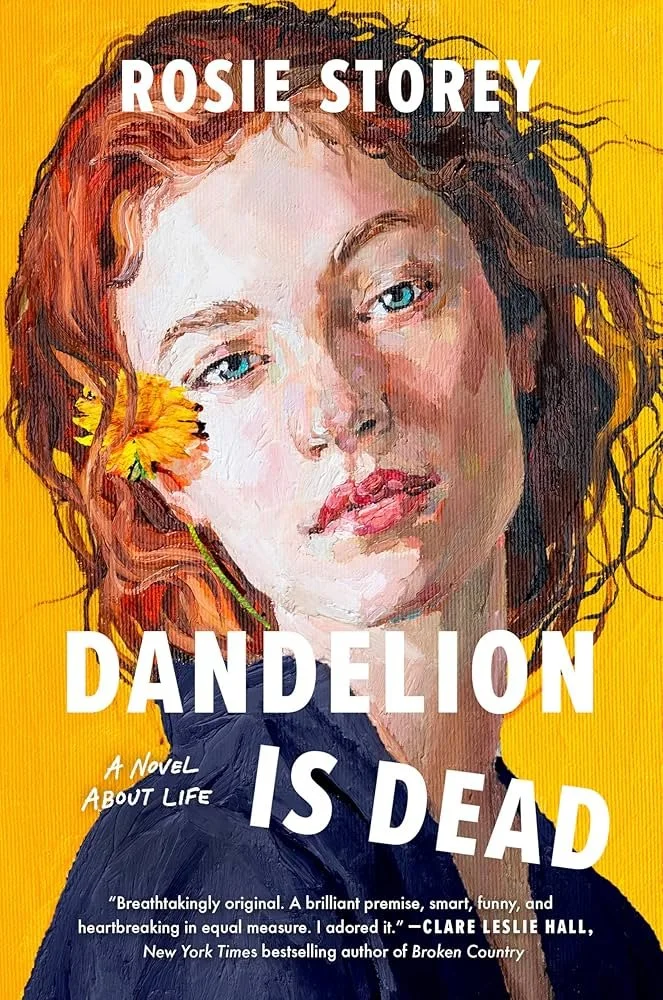
I am a sucker for a beautiful book cover, and when it looks like a literal piece of art, there is simply no universe in which I am not requesting it. Enter Dandelion Is Dead by Rosie Storey – immediate yes, immediate intrigue, immediate “this is going to hurt me, isn’t it?”
Special thanks to NetGalley and HarperCollins for sending me an advanced copy.
From the title alone, I knew this novel would be packed with jaw-opening moments. The woman at the centre of it all is dead. I assumed this would be a story about processing loss and learning how to move on in a gentle, linear way. What I got was so much more: impersonation, dating apps, emotional chaos, and fate doing that annoying thing where it keeps throwing the same person back into your life.
Dandelion Is Dead is a sharp, funny, and devastating exploration of modern dating, grief, and love, and the realisation that death doesn’t end love, it intensifies it. Through loss, you understand just how fiercely love keeps you alive.
Tell me more. What is the book about?
Dandelion has been dead for a year. One day, Poppy gets hold of her sister’s old phone and discovers Dandelion’s Hinge profile, including a conversation with a man named Jake. Poppy is in a happy relationship. She shouldn’t do this. But she is bored, restless, and struggling with unresolved grief. She wants Dandelion to feel alive again.
So she does the most unhinged thing imaginable: she becomes her.
Poppy messages Jake, pretending to be her dead sister. They meet. They connect. They fall in love. But as Poppy slowly loses sight of who she is and who Dandelion was, and as Jake realises that the one person who gave him hope after his own darkness has built their relationship on a lie, the question becomes unavoidable: can love survive when it is born from grief, deception, and longing?
What are some strong and weak points of the book?
I loved the concept of this novel. It’s original, funny, and painfully modern. Two people in their forties meeting on Hinge: one pretending to be her dead sister while already in a long-term relationship, the other co-parenting and searching for meaning after a failed marriage he sabotaged himself.
The flow between Poppy and Jake feels incredibly natural. They meet, they fall, they hurt each other, and somehow keep finding themselves back in the same room, as if fate has a personal vendetta against their emotional stability. It’s messy, raw, and deeply real. Rosie Storey snaps the rose-tinted glasses straight off the reader’s face to show them vulnerability and emotional depth. This is what relationships actually look like.
One of the most compelling aspects is Dandelion herself – a character who is never physically present. Her absence is powerful and enigmatic. Everyone remembers her as extraordinary, almost saint-like, despite her having done deeply unethical things while alive. Poppy wants to preserve her memory, but she also wants to be angry at her, and the novel allows both emotions to coexist.
Dandelion matched with Jake a year ago, but in many ways she becomes the matchmaker. She brings Poppy and Jake together and keeps pulling them back toward each other. Through their love, her memory is preserved – indirect, imperfect, and human.
That said, a few elements pulled me out of the story. Poppy and Dandelion aren’t twins, yet they look similar enough that Jake never questions that the woman from Hinge isn’t the woman he meets in real life, which felt slightly implausible.
Toward the end, the novel shifts from a messy, rom-com-adjacent love story into a more explicit exploration of grief. While the conversations around trauma felt mature, the tone became more reflective and wordy. At times, it felt like the story was explaining emotions rather than letting us live inside them. Some conflicts felt over-analysed, where I would have preferred to sit in the discomfort of not dissecting every character move.
Still, none of this takes away from what the book does best. At its core, Dandelion Is Dead is a story about finding life in the face of loss. It’s about love – how it feels, how it hurts, and the wild things we are willing to do to experience it again.
Any final thoughts? Should I read it too?
Dandelion Is Dead will remind you what it’s like to be alive. It’s an homage to going crazy, making mistakes, learning from them, and allowing yourself to change. If you feel like you are stuck or unsure of your next move, this might be the read for you. It won’t give you any answers but it will push you to dig deeper for the truth within yourself.
Storey opens her novel in a surprisingly lighthearted way. I found reading Dandelion Is Dead way funnier than Good Material by Dolly Alderton, but it is just as emotionally invasive. If you’re looking for a contemporary rom-com with depth, a comedy threaded with emotional pain, this book will make you laugh and then quietly dismantle you.
And isn’t that what good comedy does? It finds lightness in darkness. And if that means stepping into your dead sister’s neon green jeans and going on a dinner date with a stranger under a fake identity… well. Do it for the plot. Live now. Think later.
Thank you so much!! Are there any similar books that you can recommend?
🥚 Yolk by Mary H.K. Choi — a powerful exploration of sisterhood, mental health and survival, where one twin gets diagnosed with cancer but the other feels like she is about to die first.
🫂 Bonding by Mariel Franklin — a dark take on modern dating, where addiction grows from temporary bliss to something absolutely out of control.
📲 limaistyping…
rating: ☀️☀️☀️☀️
tropes: 🪦 grieving adults | 👯♀️ impersonation | 🍹 romantic comedy | ⛔️ dating fail | 🫂 second chance
read if you like: flowers, Hinge, margaritas, photography, yoga
look out for: 🌻 Jake’s sunflower lashes | 💋 a 40th birthday to remember | 💍 the ex at your engagement party | 🧘 co-parenting complications | 😶 haunting one-night stands
This one feels like stalking your catfisher.
tropes: 🪦 grieving adults | 👯♀️ impersonation | 🍹 romantic comedy | ⛔️ dating fail | 🫂 second chance
read if you like: flowers, Hinge, margaritas, photography, yoga
look out for: 🌻 Jake’s sunflower lashes | 💋 a 40th birthday to remember | 💍 the ex at your engagement party | 🧘 co-parenting complications | 😶 haunting one-night stands
This one feels like stalking your catfisher.
